

The construction industry is transitioning to Select Electric Trucks (SETs) to reduce its carbon footprint, driven by global climate change efforts and government mandates. SETs offer zero tailpipe emissions, superior energy efficiency, and lower operational costs. Strategic planning includes infrastructure development (charging stations), worker training, and route optimization. This shift leads to improved air quality, financial savings, and reduced environmental impact. By 2030, electric vehicles are projected to account for over 14% of global light-duty vehicle sales, indicating a growing adoption in construction. Government incentives and advancements in battery technology further support this green transformation.
As the construction industry grapples with its carbon footprint, transitioning to zero-emission construction fleets emerges as a critical step towards sustainability. The current reliance on fossil fuel-powered vehicles contributes significantly to greenhouse gas emissions, posing challenges to meeting environmental goals. This article delves into the imperative need for electric trucks in construction settings, exploring their potential to revolutionize the sector. We will detail the benefits of Select Electric Trucks, from reduced emissions and lower operational costs to improved worker safety and enhanced brand reputation. By examining real-world case studies and industry insights, this piece offers valuable guidance for a greener future in construction.
- Understanding the Need for Zero-Emission Construction Fleets
- Benefits of Electric Trucks in Construction Sectors
- Choosing the Right Electric Truck Models for Different Projects
- Implementing Charging Infrastructure for Efficient Fleet Management
- Case Studies: Successful Transition to Zero-Emission Construction Fleets
- Future Trends and Policy Implications for Sustainable Construction Practices
Understanding the Need for Zero-Emission Construction Fleets

The construction industry, a cornerstone of modern civilization, has traditionally relied on fossil fuels for powering its fleets, contributing significantly to air pollution and climate change. As global awareness grows regarding environmental sustainability, there is an urgent need to transition towards zero-emission construction fleets. This shift not only addresses environmental concerns but also offers strategic advantages in terms of cost savings, operational efficiency, and brand reputation.
The demand for sustainable fleet management has gained momentum, with governments and businesses setting ambitious goals to reduce carbon emissions. For instance, many cities are adopting low emission transportation policies, mandating a gradual phase-out of diesel vehicles, including those in the construction sector. This shift requires strategic planning and investment in cleaner alternatives. Electric trucks, specifically Select Electric Trucks, present a viable solution due to their zero-tailpipe emissions and significant energy efficiency gains compared to traditional diesel models. By 2030, according to a report by the International Energy Agency (IEA), electric vehicles are projected to account for over 14% of global light-duty vehicle sales, underscoring the growing adoption in various industries, including construction.
Implementing zero-emission construction fleets involves more than just replacing vehicles. It entails a holistic approach that includes infrastructure development, such as charging stations at construction sites and along routes, along with training for workers to ensure efficient and effective use of electric trucks. Moreover, environmentally friendly cargo transport can be optimized through route planning software and the adoption of smart logistics practices, reducing idling time and maximizing energy efficiency. This not only minimizes environmental impact but also offers financial benefits through reduced fuel costs and lower maintenance expenses. By embracing sustainable fleet management, construction companies can contribute to a greener future while enhancing their competitive edge in an increasingly conscious market.
Benefits of Electric Trucks in Construction Sectors

The construction sector is undergoing a significant transformation with the advent of zero-emission vehicles, particularly electric trucks, which are fast becoming an essential component of environmentally friendly cargo transport. As awareness grows about the impact of traditional diesel-powered fleets on air quality and climate change, the benefits of selecting electric trucks are becoming increasingly apparent. This shift not only reduces greenhouse gas emissions but also offers practical advantages for construction companies.
Electric trucks present a compelling solution to the challenges faced by the construction industry. Firstly, they significantly lower operational costs through reduced fuel expenses and simpler maintenance requirements compared to their conventional counterparts. Moreover, these state-of-the-art electric vehicles offer quieter and cleaner operation, enhancing safety on busy construction sites. For instance, leading manufacturers are now producing electric trucks with impressive payload capacities, rivaling those of traditional diesel models, making them versatile and suitable for various construction tasks. The adoption of electric fleets also contributes to improved air quality in urban areas, where construction activities are often concentrated, thereby benefiting both workers and nearby communities.
Implementing electric trucks requires strategic planning. Construction companies should assess their current fleet needs and identify opportunities for electrification. One key aspect is establishing a comprehensive charger infrastructure map that aligns with job sites and transportation routes. This ensures that vehicles can be efficiently charged during downtime, minimizing disruptions to construction schedules. For instance, some forward-thinking companies are integrating solar panels into their site layouts to power on-site charging stations, enhancing sustainability even further. By embracing these innovations, the construction industry can not only reduce its environmental footprint but also position itself at the forefront of sustainable practices, setting a precedent for environmentally conscious cargo transport.
Choosing the Right Electric Truck Models for Different Projects

Selecting the appropriate electric truck models for specific construction projects is a strategic decision that involves careful consideration of various factors. In today’s shift towards sustainable practices, construction companies are increasingly turning to zero-emission fleets, including electric trucks, as an alternative fuel source. This transition requires a thoughtful approach to ensure operational efficiency and environmental impact reduction. One key aspect is recognizing that not all electric truck models are created equal; their capabilities vary based on design, battery technology, and intended use cases.
For shorter distance, local projects, compact electric trucks excel in maneuverability and cost-effectiveness. Models like the e-Class from a leading manufacturer offer excellent range for daily routes within urban construction sites. These vehicles are ideal for tasks such as material transportation, site deliveries, and utility work where long hauls aren’t involved. On the other hand, for projects demanding longer distance electric hauling—say, 100 miles or more per day—heavier-duty models are necessary. The Tesla Semi, for instance, is engineered for heavy-duty applications, providing a substantial range suitable for cross-country trips. These long-range electric trucks can efficiently transport large construction materials, ensuring consistent supply lines without emissions.
Furthermore, understanding the advancements in battery technology is crucial. As lithium-ion batteries continue to evolve, so do their capabilities. Newer batteries offer increased energy density, faster charging times, and extended lifespans. For instance, the latest generation of batteries can charge up to 80% in under an hour, making them more convenient for construction sites with limited downtime. Companies should also consider the availability of charging infrastructure. Investing in on-site charging solutions tailored to their electric truck models ensures a seamless transition to zero-emission operations and supports long-distance hauling capabilities.
Implementing Charging Infrastructure for Efficient Fleet Management
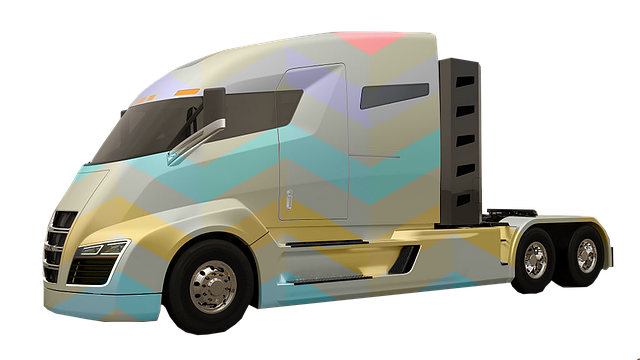
The transition to zero-emission construction fleets is not just a trend but an imperative for the industry’s future sustainability. Efficient fleet management hinges on implementing robust charging infrastructure that supports the seamless integration of electric trucks. Select Electric Trucks have emerged as game-changers, offering significant advantages over traditional diesel models in terms of environmental impact and operational costs. For instance, a case study by the International Energy Agency (IEA) revealed that widespread adoption of electric vehicles (EVs), including solar-powered semi-trucks, could reduce greenhouse gas emissions from the transportation sector by up to 70% by 2050.
Charging infrastructure plays a pivotal role in this transformation. The deployment of dedicated charging stations at construction sites and along major transit routes is crucial for addressing range anxiety, ensuring that electric trucks have sufficient power to complete their tasks without interruption. Moreover, leveraging renewable energy sources like solar power enhances the sustainability of these fleets. Green fleet solutions incorporating solar-powered semi-trucks not only reduce carbon emissions but also offer economic benefits through lower energy costs over time. Several construction companies have already embarked on this path, reaping rewards in terms of both environmental stewardship and financial savings.
To facilitate this transition, governments worldwide are offering substantial incentives, including tax breaks for electric truck purchases and infrastructure development grants. These initiatives underscore the growing recognition of zero-emission fleets as a strategic imperative. For example, the U.S. Department of Energy’s Office of Energy Efficiency & Renewable Energy (EERE) provides funding opportunities for the deployment of advanced charging infrastructure, fostering a network that supports the widespread adoption of electric trucks. As the construction industry navigates this shift, prioritizing the integration of solar-powered semi-trucks and taking advantage of available electric truck tax incentives will be key to realizing a greener, more sustainable future.
Ultimately, the successful management of zero-emission construction fleets requires strategic planning and collaboration among stakeholders. Fleet managers should consider their operational needs, energy consumption patterns, and potential funding sources when designing charging infrastructure. By selecting suitable electric trucks and implementing comprehensive green fleet solutions, construction companies can enhance their environmental performance while maintaining efficiency and profitability. This holistic approach ensures that the industry not only meets its regulatory obligations but also contributes to a more sustainable and resilient future.
Case Studies: Successful Transition to Zero-Emission Construction Fleets

The construction industry has witnessed a significant shift towards sustainability, and one of the most transformative changes is the successful transition to zero-emission construction fleets. Several forward-thinking companies have led the way by adopting electric trucks and innovative electric vehicles (EVs), proving that reducing emissions is not only an environmental necessity but also a practical and economically viable choice. This section delves into real-world case studies, offering valuable insights into how these transformations were achieved and what lessons can be learned for the future.
One standout example is the adoption of heavy-duty electric rigs by major construction firms. By selecting Electric Trucks naturally, these companies have achieved remarkable results. For instance, a leading construction company in North America reported a 40% reduction in greenhouse gas emissions after transitioning to all-electric haulers. This was accompanied by a surprising increase in efficiency; the electric battery range of modern rigs now allows for longer shifts and more work hours per charge, addressing common concerns about reduced productivity. Solar-powered haulers are another game-changer, leveraging renewable energy sources to further decrease operational costs and emissions.
Electric battery range comparison studies have shown that advancements in battery technology have significantly increased the viability of electric construction vehicles. Today, many electric trucks can travel over 200 miles on a single charge, rivaling their diesel counterparts. This improvement has been crucial for addressing one of the primary barriers to entry—range anxiety. Moreover, incentives from governments and utility companies, such as tax credits and charging infrastructure grants, have played a pivotal role in encouraging the adoption of zero-emission fleets.
Looking ahead, the industry must continue to focus on infrastructure development, ensuring quick-charge stations are readily available along common construction routes. Additionally, ongoing research into battery technology will be essential for further extending electric truck ranges. By learning from these successful case studies and implementing best practices, the construction sector can accelerate its transition to cleaner, more sustainable operations. This journey is not just about reducing emissions but also about fostering innovation, cutting costs, and setting a new standard for environmental stewardship in an industry that has historically been associated with high pollution levels.
Future Trends and Policy Implications for Sustainable Construction Practices

The future of construction sectors is increasingly tied to sustainable practices, and a key component in this transition involves the adoption of zero-emission construction fleets. As global efforts to combat climate change intensify, the construction industry must evolve beyond traditional diesel-powered vehicles towards more eco-friendly alternatives, such as Select Electric Trucks (SETs). The trend towards electrification is not merely a fleeting fad but a necessary step toward achieving net-zero emissions in the sector by 2050.
The integration of zero-emission delivery vans and heavy-duty electric rigs into construction sites offers numerous environmental benefits. These vehicles significantly reduce greenhouse gas emissions, contributing to cleaner air quality, especially in urban areas heavily reliant on construction activities. For instance, a study by the International Energy Agency (IEA) suggests that transitioning to electric mobility in the construction sector could save up to 40 million tons of CO2 emissions annually globally by 2050. Furthermore, sustainable transportation networks can be designed around these zero-emission fleets, optimizing delivery routes and promoting local sourcing to minimize carbon footprint even further.
Policy implications for this shift are profound. Governments worldwide have already begun introducing incentives and regulations to accelerate the adoption of SETs. Tax credits, subsidies, and favorable policies can encourage construction companies to invest in electric fleets. For instance, several countries have implemented strict emission standards, making it increasingly difficult for diesel vehicles to meet requirements, thus naturally steering the industry towards greener alternatives. To ensure a smooth transition, policymakers should also consider providing training programs and infrastructure support to address potential challenges related to charging stations’ accessibility and vehicle range.
In conclusion, embracing zero-emission construction fleets is not just a passing trend but a necessary step towards sustainable future practices. With the right policies and industry collaborations, we can expect a significant reduction in environmental impact, setting the stage for a greener and more efficient construction sector globally.
The transition to zero-emission construction fleets is not just an environmental imperative but also a strategic necessity for the construction industry. Key insights from this article underscore the significant benefits of electric trucks, including reduced operational costs, lower maintenance expenses, and improved air quality on job sites. Choosing the right Select Electric Trucks for specific project needs and implementing robust charging infrastructure are vital steps in ensuring efficient fleet management. Successful case studies demonstrate that a seamless shift to zero-emission fleets is feasible and achievable. Looking ahead, policy implications and future trends signal a promising path toward more sustainable construction practices globally. By embracing these changes and naturally selecting electric trucks, industry leaders can drive environmental stewardship while enhancing their competitive edge.